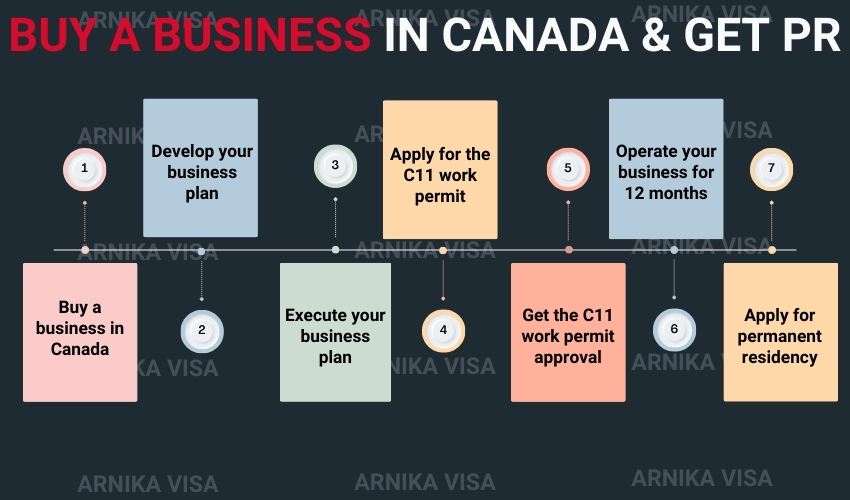

Buying an established business in Canada can give an entrepreneur access to an existing operation, customer relationships, employees, suppliers, equipment and operating history. It can also expose the buyer to financial, legal, tax, employment and operational risks that may not be obvious from a sales listing or the seller’s headline revenue figures.
A successful acquisition requires more than agreeing on a price. Buyers should define their objectives, identify suitable businesses, verify the seller’s information, assess value, arrange financing, negotiate the right transaction structure and plan the ownership transition.
Foreign nationals may also be able to acquire Canadian businesses. However, buying or owning a business does not automatically authorize a foreign buyer to work in Canada or obtain permanent residence. If immigration is part of the plan, assess the relevant immigration requirements before signing a binding purchase agreement or transferring funds.
Starting a new business and acquiring an existing one involve different opportunities and risks. An established business may already have:
These features may reduce the time needed to build an operation from scratch. They do not guarantee that customers, employees, contracts, licences or revenue will remain after a change of ownership. A buyer must verify what is transferable and what depends on the seller personally.
If you are comparing acquisition with a new venture or franchise, see our Starting a Business in Canada guide.
Important for foreign buyers: evaluate the commercial transaction and immigration strategy separately. Do not assume that purchasing a company creates a right to live or work in Canada.
Before looking at listings, decide what type of business you want to acquire and what role you intend to play after closing. The right acquisition depends on your experience, capital, risk tolerance, location preferences and time commitment.
Do not use all available capital for the purchase price. Keep enough liquidity to cover operating expenses, unexpected repairs, seasonal changes and customer-payment delays after closing.
Acquisition opportunities can be identified through business brokers, online marketplaces, professional networks, accountants, lawyers, commercial lenders, industry associations and direct approaches to business owners.
A business broker may help identify listings, coordinate introductions, manage confidentiality procedures and facilitate negotiations. Confirm whom the broker represents, how the broker is compensated and whether any conflicts of interest exist. A broker is not a substitute for the buyer’s independent lawyer or accountant.
Online listings can help buyers compare asking prices, locations, industries and seller descriptions. Treat listing information as preliminary. Revenue, earnings, inventory, assets, customer relationships and the reason for sale must be independently verified.
Accountants, lawyers, lenders, suppliers and industry contacts may know of businesses considering a sale. Some transactions are discussed privately before a public listing is prepared.
Before receiving confidential information, a seller or broker may ask you to sign a non-disclosure agreement. Read it carefully, particularly its restrictions on use of information, contact with employees or customers, and duration.
Due diligence is the process of verifying the business and identifying risks before the buyer becomes legally committed to the transaction. It should be tailored to the industry, transaction structure and complexity of the business. Use qualified legal, accounting, tax and technical professionals where appropriate.
Review several years of financial information where available, and reconcile the seller’s figures to independent records. Important documents may include:
Assess whether reported earnings are sustainable. Review unusual or one-time items, related-party transactions, owner expenses, deferred maintenance, customer concentration and revenue that may depend on the seller’s personal relationships.
A lawyer should identify which contracts and obligations continue after closing and whether third-party consent is required.
Review tax filings, remittances, payroll deductions, GST/HST and applicable provincial sales tax accounts, tax assessments, audits and correspondence with tax authorities. The tax risks differ between an asset purchase and a share purchase. Obtain advice on the specific transaction structure and any available tax elections or certificates.
Confirm that the business has the licences, permits and approvals required for its actual activities. Determine whether they can be transferred or whether the buyer must apply for new approvals. A change in ownership, directors, premises or operating model may trigger new requirements or regulatory notification.
For regulated industries—such as food, healthcare, transportation, construction, financial services or childcare—use an advisor who understands the relevant regulatory framework. Do not assume that the seller’s existing licence automatically transfers to the buyer.
The checklist is a starting point, not a complete due-diligence standard. The review should be expanded to match the business and the risks identified.
The asking price is not necessarily the fair value of the business. Valuation should consider the assets being acquired, historical and normalized earnings, cash flow, liabilities, market conditions, growth prospects and risks.
An asset-based approach considers the value of the business’s assets less its liabilities. Depending on the purpose and business, assets may include equipment, inventory, vehicles, real estate, receivables and identifiable intangible assets. Asset values should be verified, not accepted solely from the seller’s schedule.
An earnings-based approach estimates value by reference to the business’s ability to generate maintainable earnings or cash flow. Buyers may review normalized earnings, EBITDA or seller’s discretionary earnings, depending on the type and size of business. The calculation must be consistent and supported by records.
A market-based approach compares the business with relevant transactions involving similar companies. Differences in size, location, industry, growth, profitability, assets and transaction terms can make direct comparisons difficult.
A qualified business valuator, accountant or other appropriate professional can help assess the business and explain the assumptions. Do not treat a broker’s asking-price opinion or a seller’s earnings multiple as an independent valuation.
The purchase price is only one part of the funds required to complete and operate an acquisition. Prepare a funding plan that includes the deposit, closing costs, working capital, debt repayments, taxes, inventory adjustments and any immediate repairs or investment.
Buyers may contribute personal savings or capital from business partners and investors. Document each contribution and clarify whether it is equity, a shareholder loan or another arrangement. Where multiple owners are involved, agree on governance, voting, distributions, additional funding and exit arrangements.
Banks and other lenders may consider the buyer’s credit, equity contribution, collateral, management experience, purchase price, business cash flow, industry and transaction structure. Financing approval is not automatic, even where the target business has a long operating history.
The seller may agree to finance part of the purchase price. A seller note can help bridge a valuation or financing gap, but the terms must be documented. Consider interest, repayment schedule, security, subordination, default, set-off rights and whether payment depends on future performance.
Private investors may contribute capital in return for shares, profit participation or another agreed interest. Document ownership, management authority, reporting, future funding obligations and exit rights before closing.
In addition to the purchase price, budget for:
There is no universal minimum purchase price for buying a business in Canada. The amount depends on the target, its assets and earnings, location, industry, liabilities and transaction structure.
Once the buyer has sufficient information to proceed, the parties may negotiate a letter of intent or term sheet. It can outline the proposed price, transaction structure, deposit, due-diligence period, financing conditions, exclusivity, closing date and other key terms. Some provisions may be binding even when the broader letter is described as non-binding. Have a lawyer review it before signing.
The definitive purchase agreement should set out the parties’ obligations and allocate risks. Common issues include:
Do not rely on verbal promises or informal emails for material terms. Ensure the final written agreement reflects the negotiated deal and clearly states what happens if a condition is not satisfied.
In an asset purchase, the buyer acquires specified assets of the business, which may include equipment, inventory, goodwill, intellectual property and selected contracts. The buyer and seller must clearly identify the assets and liabilities included or excluded. Some contracts, permits, leases and licences may require consent or may not be transferable.
In a share purchase, the buyer acquires shares of the corporation that owns and operates the business. The corporation remains the same legal entity and continues to own its assets and remain responsible for its obligations. The buyer therefore needs to investigate historical liabilities, including tax, employment, contractual and regulatory matters.
Neither structure is automatically preferable. The decision can affect tax, liability, financing, contracts, employees, licences and immigration planning. Obtain independent Canadian legal and tax advice before choosing a structure.
Closing occurs when the conditions in the purchase agreement have been satisfied or waived and the parties exchange the agreed funds and documents. Depending on the transaction, closing steps may include:
The closing checklist should be prepared by the transaction lawyers and coordinated with the accountant, lender and relevant regulators. Do not assume a licence, lease or contract transfers simply because the purchase has closed.
The first weeks and months after closing are important. A transition plan helps protect customer relationships, retain key employees, maintain supply and avoid disruption.
Communicate the ownership change clearly and lawfully. Identify key employees, retention risks, employment obligations and any required notices or consultations. Obtain legal advice on how the transaction structure affects employment relationships.
Identify important customer and supplier relationships and determine whether contracts require consent or notice. Plan introductions and communications with the seller where appropriate, and avoid making changes before understanding their commercial impact.
Secure access to accounting systems, banking, email, websites, customer records, inventory systems and operational documentation. Change passwords and access permissions, confirm data protection obligations and establish appropriate internal controls.
Prepare a short-term operating plan covering cash flow, staffing, customer service, supplier continuity, regulatory compliance and priority repairs. Track actual performance against the assumptions used to justify the purchase price. Avoid making major changes before understanding why the existing operation works—or does not work.
Foreign nationals may generally acquire shares or assets of Canadian businesses, subject to applicable corporate, sector-specific, competition, national-security and other legal requirements. Some sectors or transactions may be subject to restrictions, review or notification under Canadian law. The specific facts and transaction value can matter, so obtain Canadian legal advice before completing a significant acquisition.
Business ownership is separate from immigration authorization. A foreign buyer may be able to own a Canadian business while living abroad, but that ownership does not automatically authorize the buyer to work in Canada, manage daily operations while physically in Canada, or reside in Canada permanently.
Before purchasing, clarify whether you plan to remain outside Canada as an owner, visit for permitted business activities, or relocate to Canada and actively manage the business. These situations can involve different immigration requirements.
An acquisition may be relevant to a business immigration strategy in some circumstances. However, purchasing a business does not itself create a work permit, provincial nomination or permanent residence. The applicant’s role, ownership and control, business activity, funds, experience, proposed benefits and the requirements of the selected program must be assessed.
The C11 category is an LMIA-exempt work-permit category under paragraph 205(a) of the Immigration and Refugee Protection Regulations. It is intended for certain business owners seeking temporary residence to establish or operate their own business where their work is expected to create significant economic, social or cultural benefits or opportunities for Canadians or permanent residents.
A person acquiring an existing business is not automatically eligible. The proposed work and the applicant’s contribution must be assessed on the facts. Under IRCC’s May 27, 2025 instructions, officers consider whether the applicant controls at least 51% of the business for this business-owner category, whether the applicant has sufficient business funds separate from personal support funds, whether the work is genuinely temporary, and whether the applicant’s work will generate significant benefits during the work-permit period.
The current instructions generally limit the work permit to no more than 18 months. They also state that entrepreneur work experience does not count as Canadian Experience Class qualifying experience. C11 is a temporary work-permit category, not a direct permanent-residence program. An applicant should not assume that operating the acquired business will automatically lead to permanent residence.
Read our detailed C11 Work Permit Canada guide before relying on this option.
Some provinces and territories have entrepreneur or business streams under their nominee programs. Each jurisdiction sets its own requirements, which may include net worth, investment, ownership, business experience, active management, job creation, location and business-performance conditions. Program availability and intake can change.
Do not assume that every business acquisition qualifies. Some streams may restrict the type of business, the location, the percentage of ownership, passive investments, succession purchases or the applicant’s role. Confirm the current official program guide before signing a purchase agreement.
A provincial nomination is not permanent residence approval. The federal government makes the final decision on a permanent-residence application.
See the official IRCC Provincial Nominee Program overview and our Canada Business Immigration guide.
As of November 2026, IRCC identifies the Start-Up Visa Program as paused. The limited transition applied to applicants with a valid 2025 commitment certificate who submitted their application by June 30, 2026. The program is not open for new applications generally. The Start-Up Visa is also designed for qualifying innovative start-ups, not as a general route for purchasing an established conventional business.
Check the current IRCC Start-Up Visa Program status before relying on any information about this program.
If immigration is a key reason for the acquisition, obtain an individual immigration assessment before making a non-refundable deposit or signing an unconditional agreement. Where appropriate, discuss whether the purchase agreement should include conditions related to financing, due diligence, regulatory approval and immigration-related timing. A commercial lawyer must draft and advise on those contractual protections.
Can a foreigner buy a business in Canada?
Foreign nationals may generally acquire shares or assets of Canadian businesses, subject to applicable corporate, sector-specific and other legal requirements. Owning a business does not automatically authorize the buyer to work in Canada.
How much money do I need to buy a business in Canada?
There is no universal minimum. The required capital depends on the purchase price, industry, location, profitability, assets, liabilities, financing, transaction costs and working capital needed after closing.
Does buying a business guarantee permanent residence?
No. A business acquisition does not guarantee a work permit, nomination or permanent residence. Any immigration option has separate eligibility and evidentiary requirements.
Should I buy the shares or the assets?
The choice depends on tax, legal, financial, contractual and operational factors. An asset purchase generally transfers selected assets and agreed liabilities; a share purchase transfers ownership of the corporation, which retains its assets and liabilities. Obtain independent legal and tax advice.
Why is due diligence important?
Due diligence verifies the seller’s information and identifies financial, legal, tax, employment, regulatory and operational risks before closing. The scope should be tailored to the business and transaction.
Can I finance a business acquisition?
Potential sources include personal capital, commercial loans, seller financing and private investors. Financing approval depends on the buyer, business, transaction and lender requirements.
How long does it take to buy a business?
The timeline varies with the complexity of the business, quality of records, due diligence, financing, negotiations, third-party consents and regulatory approvals. There is no standard timeline.
Can I operate the acquired business while visiting Canada?
Not automatically. The activities a visitor may undertake are limited, and actively working in or managing a Canadian business may require work authorization. Assess the specific activities and immigration rules before travelling.
Can buying an existing business qualify me for a C11 work permit?
Possibly in some cases, but acquisition alone is not enough. The applicant must meet the applicable C11 requirements, including control, funds, temporary purpose and significant benefit to Canada.
Buying an established business involves commercial, legal, financial and regulatory decisions. If you are a foreign entrepreneur considering an acquisition as part of a Canadian immigration plan, assess immigration eligibility before committing to the transaction.
Arnika Visa provides Canadian immigration consulting for entrepreneurs and business owners considering C11 work permits and provincial entrepreneur pathways. We can help assess the immigration issues connected with your proposed business acquisition and identify the questions that should be resolved before you proceed.
Explore our Canada Business Immigration services and pathways or contact Arnika Visa to discuss your circumstances.
Arnika Visa | Regulated Canadian Immigration Consultant (RCIC R710241)
Reviewed by Reza Eslami, RCIC (R710241)