
What Does “C11 Visa Canada” Mean?
Many foreign entrepreneurs search for “C11 Visa Canada” when exploring the possibility of starting or operating a business in Canada. The phrase is commonly used online, but it is not the official name of a Canadian visa or immigration program.
The term usually refers to the C11 work permit category. C11 is an LMIA-exempt work permit category under paragraph 205(a) of the Immigration and Refugee Protection Regulations (IRPR), within Canada’s International Mobility Program (IMP). It may allow an eligible foreign business owner or entrepreneur to enter Canada temporarily to establish or operate a business where their work is expected to create or maintain significant economic, social or cultural benefits, or opportunities for Canadian citizens or permanent residents.
A work permit and a visa are different documents. A work permit authorizes work in Canada subject to its conditions. A temporary resident visa (TRV), if required based on nationality and travel circumstances, is a travel document used to seek entry to Canada. Approval of a work permit does not mean every applicant will also receive a visa automatically.
For detailed eligibility criteria, evidence and application steps, see our C11 Work Permit Canada: Eligibility and Application Guide.
Who Is the C11 Work Permit Intended For?
C11 may be relevant to a foreign national who intends to work in their own Canadian business as an entrepreneur or self-employed business owner. The applicant must have a genuine, active role in the business. The application must explain what work the applicant will perform and how that work—not simply the investment or the applicant’s personal income—will provide a significant benefit to Canada.
Depending on the facts, a proposed business may involve establishing a new operation or acquiring an existing business. Neither incorporation nor purchasing a Canadian company automatically qualifies someone for a C11 work permit. The applicant must still satisfy the C11 requirements, including control of the business, a genuine temporary work plan, sufficient funds and significant benefit.
What Are the Main C11 Requirements?
The assessment is case-specific. Key considerations include:
- Business ownership and control: Under IRCC’s C11 business-owner instructions, the applicant should control at least 51% of the business to be considered in the business-owner category.
- Active involvement: The applicant must genuinely perform the proposed business-owner or entrepreneurial work in Canada. A passive investment alone is not enough.
- Relevant experience and ability: The applicant should show that their background, experience and skills are appropriate for the proposed business and duties.
- Significant benefit: The evidence should explain how the applicant’s work will create or maintain significant economic, social or cultural benefits, or opportunities for Canadians or permanent residents.
- Separate funds: The applicant must demonstrate business funds to establish or operate the business and personal support funds for themselves and accompanying family members. These funds should be clearly distinguished.
- Temporary purpose: The applicant must demonstrate that the proposed work and stay are temporary or seasonal and provide a credible plan for leaving Canada at the end of the authorized period.
There is no universal minimum investment amount set for every C11 case. The amount and source of funds must nevertheless be credible and sufficient for the proposed business, its scale and the applicant’s stated plan.
Does the C11 Work Permit Require an LMIA?
Generally, no. C11 is an LMIA-exempt category under the International Mobility Program. However, LMIA-exempt does not mean that the application is automatic or that no employer-side steps are required.
In most cases, the business owner must submit the required offer of employment information through the IRCC Employer Portal and pay the employer compliance fee before submitting the work permit application. The applicant must also provide evidence supporting the C11 exemption and meet the other work permit requirements.
See IRCC’s explanation for entrepreneurs applying for a work permit without an LMIA.
Can I Use C11 to Buy an Existing Business in Canada?
Potentially, but buying a business does not by itself make the purchaser eligible. The applicant must have the required control of the business, intend to work actively in it and demonstrate that their work will create or maintain significant benefit during the proposed period in Canada.
The business plan should explain the transaction, the applicant’s role after the purchase, the business’s current operations, the proposed changes or growth, the financial resources available and the specific benefits expected. A purchase price or large investment alone does not establish significant benefit.
If you are considering an acquisition, our practical guide to buying a business in Canada explains due diligence and related considerations.
Can I Start a New Business in Canada Under C11?
A new business may be considered, provided the applicant can show a credible start-up plan and satisfy the C11 requirements. The plan should go beyond a general market overview. It should set out concrete steps, timelines, premises or operating arrangements, financing, licences where applicable, customers or market development, staffing and the applicant’s own duties.
For help understanding the business-plan evidence, see Canada Immigration Business Plan and our C11 Work Permit Canada guide.
How Long Can a C11 Work Permit Be Issued For?
Under IRCC’s current C11 instructions, officers should not issue a C11 business-owner work permit for more than 18 months. The requested period should match the temporary business activity and the applicant’s plan. A longer-term business proposal needs a clear and credible explanation of how the applicant will transition out of managing or operating the business and leave Canada at the end of the authorized period.
An extension is not automatic. An applicant seeking more time must show why it is needed, what was accomplished during the previous period, what prevented the original plan from being completed if relevant, and how the continued work will still provide significant benefit. The temporary nature of the stay must also remain credible.
Can a C11 Work Permit Lead to Permanent Residence?
C11 is a temporary work permit category, not a permanent residence program. A C11 work permit does not guarantee or automatically lead to PR.
An entrepreneur may later qualify for a separate federal or provincial immigration pathway, depending on the program rules and their personal circumstances. Possible routes may include a Provincial Nominee Program or an Express Entry program, but eligibility must be assessed independently. Business ownership or operating a business in Canada does not, on its own, create eligibility for permanent residence.
An important point: work experience gained as a C11 entrepreneur or self-employed business owner does not count as qualifying work experience for the Canadian Experience Class (CEC), according to IRCC’s C11 instructions. Applicants should not build a PR strategy on the assumption that their C11 self-employment will count toward CEC.
For a broader overview of business-related immigration options, see Business Immigration Canada.
Is C11 Suitable for Passive Investors?
Generally, no. C11 is intended for a business owner who will actively perform work in the Canadian business. Someone who only contributes capital, holds shares or expects to receive investment returns without actively managing or operating the business is not normally a fit for this category.
The applicant’s proposed duties, business control and actual involvement must be consistent with the C11 business-owner requirements.
Common Misunderstandings About the C11 Visa Canada
“C11 Visa” is an official visa category. It is not. C11 is the administrative code commonly associated with this LMIA-exempt work permit category.
Any business investment qualifies. No. The applicant must actively work in the business and demonstrate significant benefit to Canada.
There is no minimum investment, so a small amount is always enough. No fixed universal minimum does not mean any amount will be sufficient. The funds must be credible and adequate for the proposed business.
Buying a Canadian business guarantees a work permit. No. A purchase alone does not establish C11 eligibility. Ownership control, active work, significant benefit, funds and temporary intent are assessed.
C11 is a direct route to permanent residence. No. PR requires a separate application under a program for which the applicant qualifies.
C11 can be issued for several years as a standard business permit. IRCC’s current business-owner instructions set an 18-month maximum for this C11 category. Extensions require a fresh assessment.
Frequently Asked Questions About C11 Visa Canada
Is there an official C11 Visa Canada?
No. “C11 Visa Canada” is a common search term. The relevant authorization is generally a C11 work permit under the International Mobility Program.
Do I need to own 100% of the Canadian business?
Not necessarily. IRCC’s C11 business-owner instructions state that the applicant should control at least 51% of the business. The actual ownership and control structure must be documented.
Is there a fixed minimum investment for C11?
There is no universal fixed minimum investment amount. The applicant must show sufficient, credible business funds for the proposed operation, separately from personal support funds.
Can I apply under C11 if I purchase a franchise?
Possibly, if the applicant will genuinely control and actively operate the business and can demonstrate significant benefit and all other requirements. Purchasing a franchise alone is not enough.
Can I apply for C11 from inside Canada?
The place and method of application depend on the applicant’s current status and the applicable IRCC rules. Being a visitor in Canada does not automatically make someone eligible to apply for a work permit from inside Canada. Confirm the current in-Canada application rules before relying on this option.
Does C11 work experience count for Canadian Experience Class?
No. IRCC’s C11 instructions state that work experience gained as an entrepreneur or self-employed business owner does not qualify as Canadian Experience Class work experience.
Can I bring my family under C11?
Eligible family members may be able to accompany the principal applicant, but each person must meet the requirements for their own temporary resident document. A spouse’s eligibility for an open work permit is subject to separate rules and is not automatic.
Related Business Immigration Resources
- C11 Work Permit Canada: Complete Guide — detailed eligibility, significant benefit and application guidance.
- Canada Immigration Business Plan — business-plan structure and supporting evidence.
- Business Immigration Canada — overview of business immigration pathways.
- Entrepreneur Immigration Canada — provincial entrepreneur options and program considerations.
- Buying a Business in Canada — acquisition and due diligence guidance.
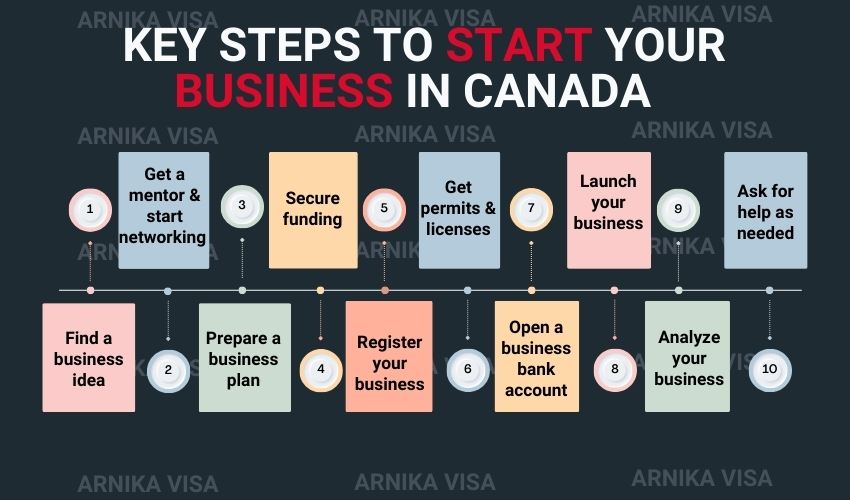
- Starting a Business in Canada — practical steps for establishing a Canadian business.
Need Professional Guidance With a C11 Application?
A C11 application requires more than company registration or proof of investment. The applicant must present a consistent case showing business control, active duties, sufficient business and personal funds, a credible temporary plan and significant benefit to Canada.
Arnika Visa assists entrepreneurs and business owners with C11 eligibility assessments, work permit applications, business plans and business immigration strategies. Each case is assessed on its own facts, and no immigration outcome can be guaranteed.
To discuss your circumstances, book a consultation with Reza Eslami, RCIC (R710241).
About the Author
Reza Eslami, RCIC (R710241), is a Regulated Canadian Immigration Consultant specializing in Canadian business immigration. He advises entrepreneurs, investors and international business owners on C11 work permits, Intra-Company Transfers, entrepreneur immigration and other Canadian business immigration pathways.