

Canada hosts thousands of international conferences, trade shows, academic seminars, industry exhibitions, and professional workshops every year, attracting business professionals, researchers, entrepreneurs, academics, and corporate executives from around the world.
If you’re planning to attend a conference in Canada, one of the first questions you may have is whether you need a Canada Conference Visa and what documents are required before travelling.
The term “Canada Conference Visa” is commonly used to describe the travel authorization required to attend conferences or similar professional events. However, in most cases, attendees do not apply for a separate conference visa. Instead, they enter Canada as business visitors using either a Temporary Resident Visa (Visitor Visa) or an Electronic Travel Authorization (eTA), depending on their nationality.
Understanding which travel document you need—and preparing a complete application—can significantly improve your chances of entering Canada smoothly and avoiding unnecessary delays.
In this guide, you’ll learn who needs a Canada Conference Visa, the eligibility requirements, required documents, invitation letters, common reasons for refusal, and practical tips for preparing a strong application.
If you’re unsure whether your trip qualifies as a business visit, our complete guide to Business Visitor Visa Canada explains who qualifies, what activities are permitted, and when a work permit may be required.
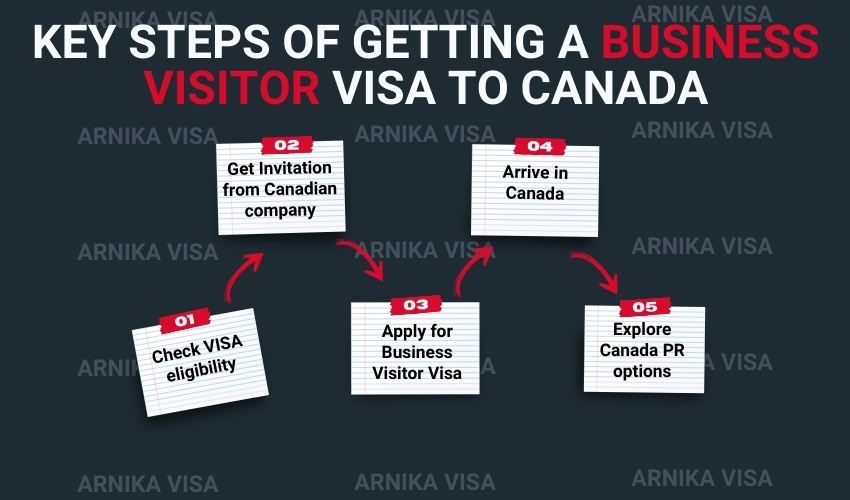
Do You Need a Canada Conference Visa?
Whether you need a Canada Conference Visa depends primarily on your nationality and the purpose of your visit.
For most international conference attendees, there is no separate “conference visa.” Instead, travellers enter Canada as business visitors, provided they are attending legitimate business or professional events without entering the Canadian labour market.
Depending on your citizenship, you may require one of the following travel documents:
- Temporary Resident Visa (Visitor Visa) — required for travellers from visa-required countries.
- Electronic Travel Authorization (eTA) — available to eligible visa-exempt travellers arriving by air.
Although the travel document may differ, applicants must still demonstrate that they meet Canada’s temporary entry requirements and that they intend to leave Canada at the end of their authorized stay.
Business visitors attending conferences are generally permitted to:
- Attend conferences, conventions, and trade shows.
- Participate in seminars and professional workshops.
- Deliver short presentations or lectures where permitted.
- Network with industry professionals.
- Meet clients, suppliers, or business partners.
- Explore investment or commercial opportunities during their visit.
However, attending a conference does not authorize employment in Canada or allow you to perform work that requires a Canadian work permit.
If your activities go beyond attending the conference—for example, accepting employment or actively operating a Canadian business—you may require a different immigration pathway.
Entrepreneurs planning to establish or actively operate a Canadian business after their visit should review our C11 Work Permit Canada guide to determine whether a work permit is required.
Who Can Apply for a Canada Conference Visa?
Conference attendees come from a wide variety of professional backgrounds.
Common applicants include:
- Business owners and entrepreneurs
- Corporate executives
- Sales and marketing professionals
- Researchers and scientists
- University professors
- Students presenting academic papers
- Engineers and IT professionals
- Healthcare professionals
- Investors exploring Canadian markets
- Members of professional associations
Regardless of your profession, you should be able to demonstrate that your primary employment, business activities, and source of income remain outside Canada and that your visit is temporary.
Immigration officers may also review whether your participation in the conference is consistent with your education, professional experience, or current employment.
For example, an engineer attending an international engineering conference or a healthcare professional participating in a medical symposium will generally present a clearer connection between their professional background and the purpose of their visit than someone attending an event unrelated to their field.
Providing supporting documentation that clearly explains this connection can strengthen your application and help immigration officers better understand the purpose of your visit.
Documents Required for a Canada Conference Visa
A well-prepared application should clearly demonstrate both the purpose of your visit and your intention to return to your home country after the conference.
Although document requirements vary depending on individual circumstances, applicants commonly provide:
- A valid passport.
- Conference registration confirmation.
- Official invitation letter from the conference organizer.
- Travel itinerary.
- Hotel reservations (if available).
- Proof of financial support.
- Employment or business ownership documents.
- Evidence of ties to your home country.
- Previous travel history (when available).
Supporting documents should be consistent with the information provided in your application and clearly explain why you are travelling to Canada.
Conference Invitation Letter
One of the most important supporting documents for many conference attendees is the invitation letter issued by the conference organizer.
A professional invitation letter typically includes:
- The name of the conference or event.
- Conference dates and location.
- Confirmation of your registration.
- Your role (attendee, speaker, exhibitor, or presenter).
- Organizer contact information.
- Confirmation that you have been invited to participate.
An invitation letter alone does not guarantee visa approval. Immigration officers assess the application as a whole, considering your financial situation, travel history, purpose of travel, and ties to your home country.
How to Apply for a Canada Conference Visa
The application process depends on your nationality and whether you require a Temporary Resident Visa (TRV) or an Electronic Travel Authorization (eTA) to enter Canada.
Regardless of the travel document required, applicants should ensure their application clearly demonstrates the purpose of their visit and includes sufficient supporting documentation.
The application process generally involves the following steps.
Step 1: Determine Your Travel Requirements
Before applying, determine whether your nationality requires:
- A Temporary Resident Visa (TRV), or
- An Electronic Travel Authorization (eTA).
Travellers from visa-required countries must obtain a visitor visa before travelling, while eligible visa-exempt travellers usually require an eTA when arriving by air.
Step 2: Register for the Conference
Most applications are stronger when supported by official conference registration.
Applicants should retain:
- Registration confirmation
- Payment receipts
- Event schedules
- Speaker confirmations (if applicable)
These documents help demonstrate the legitimate purpose of the visit.
Step 3: Gather Supporting Documents
Prepare documentation that clearly supports your application, including:
- Valid passport
- Conference invitation letter
- Registration confirmation
- Proof of employment or business ownership
- Financial documents
- Travel itinerary
- Hotel reservations (if available)
- Evidence of ties to your home country
Providing organized and consistent documentation helps immigration officers assess your application more efficiently.
Step 4: Submit Your Application
Applications are generally submitted online through Immigration, Refugees and Citizenship Canada (IRCC).
Depending on your country of residence, you may also need to visit a Visa Application Centre (VAC) to complete biometrics.
Step 5: Wait for Processing
Processing times vary depending on:
- Country of residence
- Visa office workload
- Biometrics
- Security checks
- Application completeness
Applicants should submit their applications well before the conference date. For current timelines and the factors that may affect processing, read our guide to Canada Business Visa Processing Time.
Common Reasons Conference Visa Applications Are Refused
Receiving a conference invitation does not automatically guarantee entry to Canada.
Immigration officers evaluate the complete application to determine whether the applicant meets Canada’s temporary resident requirements.
Some of the most common reasons for refusal include:
1. Unclear Purpose of Travel
Applicants should clearly explain:
- Why they are attending the conference
- Their role at the event
- How the conference relates to their profession or business
Providing a detailed invitation letter and conference registration helps establish a legitimate purpose.
2. Weak Ties to the Home Country
Applicants must convince immigration officers that they intend to return home after the conference.
Helpful evidence may include:
- Employment
- Business ownership
- Family responsibilities
- Property ownership
- Financial commitments
3. Insufficient Financial Evidence
Applicants should demonstrate that they can pay for:
- Airfare
- Accommodation
- Meals
- Transportation
- Conference expenses
Financial documents should be consistent with the planned duration of the trip.
4. Incomplete Documentation
Missing invitation letters, conference registrations, employment documents, or financial records may delay processing or result in refusal.
Applicants should carefully review their application before submission.
5. Previous Immigration Concerns
Past visa refusals, overstays, or immigration violations may result in additional scrutiny.
Applicants should answer all application questions honestly and provide explanations where appropriate.
What Can You Do While Attending a Conference in Canada?
Many international conferences offer valuable networking opportunities beyond the formal event itself.
While maintaining business visitor status, attendees may generally:
- Attend conference sessions
- Participate in workshops
- Network with industry professionals
- Meet potential clients
- Meet suppliers
- Meet business partners
- Attend trade exhibitions
- Explore Canadian markets
- Visit potential investment opportunities
- Meet lawyers, accountants, or business consultants
For many entrepreneurs, attending a conference is also an opportunity to evaluate Canada’s business environment before making future investment decisions.
For example, some attendees use their visit to:
- Explore businesses for sale
- Visit franchise locations
- Meet business brokers
- Conduct preliminary market research
- Learn about Canadian business regulations
These activities are often an important first step before deciding whether to establish or purchase a business in Canada. If you’re considering acquiring an existing company, our Buy a Business in Canada guide explains the purchase process, due diligence, and legal considerations.
Conference Visa vs. Work Permit
Attending a conference as a business visitor is very different from working in Canada.
Conference attendees may participate in temporary professional activities related to the event, but they are generally not authorized to enter the Canadian labour market.
If your plans include:
- Accepting employment in Canada
- Managing a Canadian business
- Providing ongoing services to Canadian clients
- Operating a company on a day-to-day basis
you will likely require a work permit rather than business visitor status.
Entrepreneurs who decide to establish or acquire a Canadian business after visiting may become eligible for a different immigration pathway. Our complete guide to the C11 Work Permit Canada explains the eligibility requirements and application process for business owners.
Frequently Asked Questions
Is there a separate Canada Conference Visa?
No. In most cases, there is no separate visa category called a “Canada Conference Visa.” Most attendees enter Canada as business visitors using either a Temporary Resident Visa (Visitor Visa) or an Electronic Travel Authorization (eTA), depending on their nationality.
Can I attend a conference on a Visitor Visa?
Yes. Eligible foreign nationals may attend conferences, seminars, conventions, trade shows, and professional workshops as business visitors, provided they do not enter the Canadian labour market or perform work requiring a work permit.
Do I need an invitation letter to attend a conference in Canada?
Although not mandatory in every case, an invitation letter from the conference organizer is one of the strongest supporting documents for a conference visa application. It helps explain the purpose of your visit and confirms your participation in the event.
Can I present a paper or give a presentation at a conference?
In many situations, yes. Researchers, professors, industry experts, and professionals may attend conferences to present papers, participate in panel discussions, or deliver short presentations, provided these activities remain consistent with business visitor status.
Can I meet Canadian companies during my conference visit?
Yes. Business visitors may meet suppliers, clients, business partners, investors, or professional advisors while attending conferences, provided they do not begin working for a Canadian employer or actively operate a Canadian business.
Can I explore investment opportunities while attending a conference?
Yes. Many entrepreneurs use conferences to learn about Canadian industries, meet business brokers, explore franchise opportunities, or inspect businesses for sale before making an investment decision.
Can I extend my stay after the conference?
You may apply to extend your visitor status if you remain eligible and submit your application before your authorized stay expires. Approval is not automatic and depends on your individual circumstances.
When do I need a work permit instead of a conference visa?
If you intend to work for a Canadian employer, actively manage a Canadian business, or provide ongoing services in Canada, you will generally require a work permit rather than business visitor status.
Continue Planning Your Business Visit to Canada
If you’re travelling to Canada for business or professional purposes, these guides may also help:
- Business Visitor Visa Canada – Learn who qualifies as a business visitor and what activities are permitted.
- Canada Business Visa Processing Time – Understand current processing timelines and factors that affect application speed.
- Buy a Business in Canada – Step-by-step guide to purchasing an existing Canadian business.
- Buying a Franchise in Canada – Learn how to evaluate and invest in a Canadian franchise.
- C11 Work Permit Canada – Explore a work permit option for entrepreneurs planning to actively operate a Canadian business.
- Canada Business Immigration – Overview of Canada’s entrepreneur and investor immigration pathways.
How Arnika Visa Can Help
Attending a conference in Canada can be much more than a professional development opportunity. For many entrepreneurs, investors, researchers, and executives, it is also the first step toward building long-term business relationships, exploring investment opportunities, and expanding into the Canadian market.
At Arnika Visa, we help entrepreneurs, professionals, researchers, and international companies prepare strong conference and business visitor applications. Whether you’re attending a conference, exploring investment opportunities, or preparing for a future C11 Work Permit Canada application, our experienced team can guide you through every stage of the process.
Whether you are travelling to Canada to attend an international conference, meet potential business partners, or explore future investment opportunities, our experienced team can help you prepare a strong application and develop a long-term immigration strategy.
Book a consultation today to discuss your Canadian business and immigration goals.

Frequently Asked Questions

Reza Eslami is a Regulated Canadian Immigration Consultant (RCIC) specializing in Canadian business immigration. He advises entrepreneurs, executives, investors, researchers, and international companies on Business Visitor Visas, conference travel, C11 Work Permits, business acquisitions, and business expansion into Canada.