

Receiving a Canada visa refusal can be stressful, confusing, and emotionally overwhelming. Many applicants spend months preparing their applications only to receive a refusal letter from Immigration, Refugees and Citizenship Canada (IRCC) without fully understanding what went wrong.
Whether your application involved a visitor visa, study permit, or work permit, a refusal does not always mean the end of your immigration plans. In many situations, applicants can successfully reapply after identifying the refusal concerns and improving their application strategy.
Immigration officers carefully evaluate every application based on Canadian immigration laws, supporting documents, financial evidence, travel history, and overall credibility. Even small inconsistencies or weak supporting documents may influence the final decision.
This Canada visa refusal guide explains the most common refusal reasons, what immigration officers usually assess, and how applicants may improve their chances before reapplying.
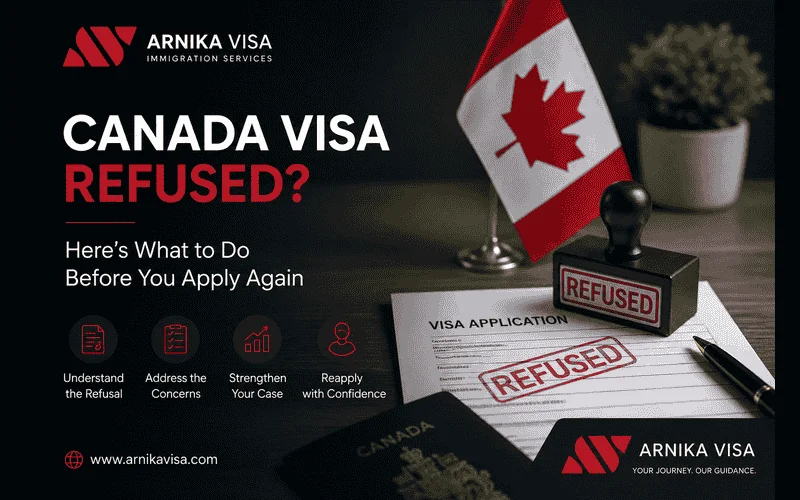
What Does a Canada Visa Refusal Mean?
A Canada visa refusal means the immigration officer was not satisfied that the applicant met the legal requirements for the requested visa or permit.
In many cases, refusals involve concerns related to:
- temporary resident intent
- financial support
- travel history
- purpose of visit
- supporting documents
- employment history
- credibility of information
- ties to home country
Most refusal letters provide only general explanations and may not fully explain the officer’s detailed reasoning. This is why many applicants request GCMS notes after receiving a refusal.
A refusal also does not automatically mean permanent ineligibility. Many applicants successfully obtain approval later after addressing the concerns identified in the previous application.

Common Types of Canada Visa Refusals
Canada visa refusals may occur under several immigration categories. The most common refusal categories include:
- Visitor visa refusals
- Study permit refusals
- Work permit refusals
- Permanent residence refusals
- Inadmissibility-related refusals
This guide focuses primarily on temporary resident refusals involving visitor visas, study permits, and work permits.
Visitor Visa Refusal Reasons in Canada
Visitor visa refusals are among the most common immigration refusals in Canada.
Immigration officers assess whether applicants genuinely intend to visit Canada temporarily and leave at the end of their authorized stay.
Common visitor visa refusal reasons in Canada include:
- Weak ties to home country
- Insufficient financial support
- Poor travel history
- Unclear purpose of visit
- Family ties in Canada
- Inconsistent documentation
- Previous immigration refusals
Applicants often underestimate the importance of clearly demonstrating temporary intent and providing strong supporting documentation.
Many visitor visa refusals involve concerns under Section 179(b) of the Immigration and Refugee Protection Regulations.
For a more detailed breakdown of visitor visa refusal concerns, financial issues, purpose of travel weaknesses, and reapplication strategies, read our complete guide on Canada Visitor Visa Rejection Reasons.
Link to article: https://arnikavisa.com/why-my-trv-visitor-visa-was-refused/
Study Permit Refusal Reasons in Canada
Study permit refusals have increased significantly in recent years as immigration officers apply stricter assessments regarding genuine student intent and financial capability.
Common study permit refusal reasons include:
- Weak Statement of Purpose (SOP)
- Unclear educational goals
- Insufficient financial support
- Poor academic progression
- Large study gaps
- Concerns about temporary intent
- Questionable program relevance
- Previous refusals
Many applicants focus only on admission letters and tuition payments while failing to properly explain:
- Career progression
- Educational purpose
- Long-term academic goals
- Reasons for choosing Canada
A well-prepared study plan and strong supporting documents are critical in study permit applications.
For a more detailed breakdown of study permit refusal concerns, financial issues, SOP weaknesses, and reapplication strategies, read our complete guide on Canada Study Visa Rejection Reasons.
Link to article: https://arnikavisa.com/top-canada-study-permit-refusal-reasons-solutions/
Work Permit Refusal Reasons in Canada
Work permit refusals may occur for several reasons depending on the work permit category.
Common work permit refusal reasons include:
- weak employer documentation
- LMIA concerns
- Job offer inconsistencies
- Insufficient qualifications
- Inadmissibility concerns
- Previous immigration violations
- Financial issues
- Credibility concerns
In employer-specific work permit applications, immigration officers may assess:
- Legitimacy of employer
- Business operations
- Job offer credibility
- Applicant qualifications
- Labor market factors
Applicants should ensure their documentation clearly supports the work permit category being requested.
What Is Section 179(b) Refusal?
Section 179(b) refusals are among the most common Canada visa refusals involving temporary resident applications.
Under Section 179(b), the immigration officer must be satisfied that the applicant will leave Canada at the end of their authorized stay.
This refusal often relates to concerns involving:
- Temporary intent
- Financial situation
- home-country ties
- Travel history
- Overall credibility
Many applicants misunderstand Section 179(b) refusals and assume they are permanently banned from Canada. In reality, these refusals often involve insufficient evidence supporting temporary resident intent.
A stronger and better-prepared application may improve approval chances during reapplication.
Why Do Canada Visa Applications Get Refused?
Canada visa refusals often occur because the application fails to address the officer’s concerns clearly and convincingly.
Common refusal factors may include:
- Incomplete documentation
- Weak financial evidence
- Inconsistent information
- Unclear immigration purpose
- Weak explanation letters
- Credibility concerns
- Poor application preparation
In many refusal cases, applicants submit generic applications without properly explaining their individual circumstances.
Immigration officers assess applications holistically, meaning even small weaknesses across multiple areas may contribute to refusal.
Can You Reapply After a Canada Visa Refusal?
Yes, many applicants can successfully reapply after a Canada visa refusal.
However, reapplying immediately with the same documents and explanations may lead to another refusal.
Before reapplying, applicants should carefully evaluate:
- Refusal reasons
- Supporting documentation
- Financial evidence
- Travel history concerns
- Explanation letters
- Credibility issues
In many situations, ordering GCMS notes before reapplying may help applicants better understand the officer’s concerns and prepare a stronger application.
A strategic reapplication is usually more effective than rushing to submit another application immediately after refusal.
Should You Order GCMS Notes After Refusal?
GCMS notes are internal immigration officer notes related to a visa or permit application.
These notes may provide additional information regarding:
- Refusal concerns
- Officer observations
- Financial assessment
- Credibility concerns
- Documentation weaknesses
- Temporary intent assessment
Many refusal letters contain only general refusal reasons. GCMS notes may help applicants better understand the detailed reasoning behind the decision.
In complex refusal cases, reviewing GCMS notes before reapplying may help applicants identify weaknesses and improve their application strategy.
How to Improve Your Chances After a Canada Visa Refusal
Before reapplying after a refusal, applicants should focus on strengthening the weaknesses identified in the previous application.
Possible improvements may include:
- Stronger financial documents
- Updated employment evidence
- Clearer explanation letters
- Better travel history documentation
- Stronger purpose of visit
- Improved study plans
- Stronger employer documentation
- Additional supporting evidence
Applicants should also ensure all information is complete, accurate, and consistent throughout the application package.
Careful preparation and stronger supporting documentation may significantly improve approval chances.
When Should You Consult an Immigration Professional?
Some refusal cases are straightforward, while others may involve more complex immigration concerns.
Professional immigration guidance may be helpful in situations involving:
- Multiple refusals
- Inadmissibility concerns
- Complex immigration history
- Financial concerns
- Weak documentation
- Previous immigration violations
- Unclear refusal reasons
A professional review may help identify weaknesses in the previous application and improve the overall reapplication strategy.
Understanding the specific reasons behind a Canada visa refusal is often one of the most important steps before reapplying.
Frequently Asked Questions About Canada Visa Refusal
What are the most common Canada visa refusal reasons?
The most common Canada visa refusal reasons include weak financial support, poor travel history, weak ties to home country, unclear purpose of visit, and inconsistent documentation.
Can I apply again after Canada visa refusal?
Yes. Many applicants successfully reapply after improving their documentation and addressing the refusal concerns.
Does Canada visa refusal affect future applications?
Previous refusals may be considered during future applications, but they do not automatically prevent future approval.
Can GCMS notes help after refusal?
Lorem ipsum dolor sit amet, consectetur adipiscing elit. Ut elit tellus, luctus nec ullamcorper mattis, pulvinar dapibus leo.
How long should I wait before reapplying?
There is no mandatory waiting period. However, applicants should usually wait until they can meaningfully improve their application before reapplying.
Can I appeal a Canada visa refusal?
Some refusals may qualify for judicial review depending on the circumstances. In many cases, reapplication may be the more practical solution.
Final Thoughts
Receiving a Canada visa refusal can be disappointing, but many refusals can be addressed with stronger preparation and better supporting documentation.
Immigration officers carefully assess each application individually, and even small details may influence the final decision. Understanding the refusal concerns is often the most important step before preparing a new application.
Whether the refusal involved a visitor visa, study permit, or work permit, a well-prepared reapplication strategy may improve the chances of approval.
If your Canada visa application was refused, carefully reviewing the refusal reasons and strengthening your supporting documents may help you prepare a stronger future application.
Related Visitor Visa Refusal Topics:
- Visitor Visa Refusal Reasons in Canada
- Visitor Visa Refused After Biometrics
- Reapply After Visitor Visa Refusal
- GCMS Notes After Visitor Visa Refusal

About the Author

Reza Eslami, RCIC (R710241), is a Regulated Canadian Immigration Consultant and the founder of Arnika Visa. He has assisted clients with visitor visas, study permits, work permits, family sponsorships, business immigration, and complex refusal matters. Through Arnika Visa, he helps applicants understand immigration decisions, identify potential grounds for refusal, and prepare stronger applications tailored to their individual circumstances.